
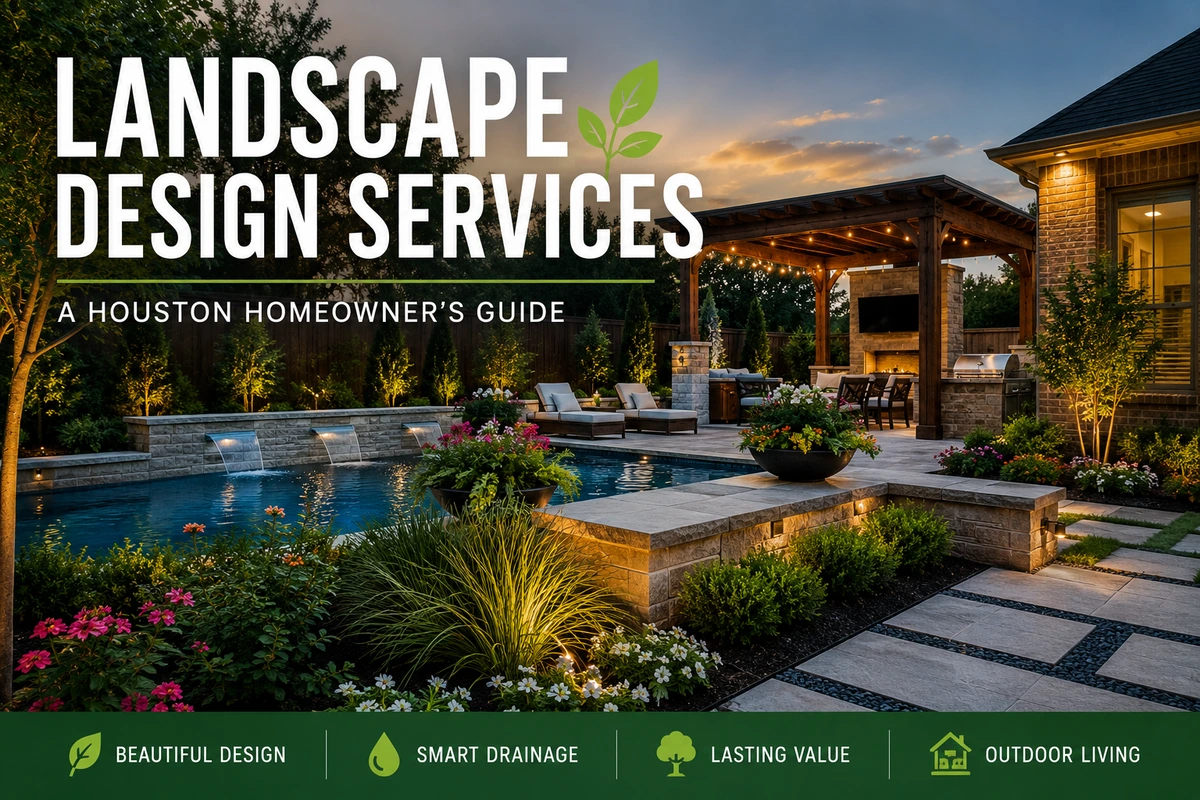
Landscape design services in Greater Houston aren’t what most homeowners think they are. If you’ve gotten a quote from three different companies and can’t figure out why the prices are $40,000 apart, this guide is for you. It covers what professional design actually includes, how the process works from first conversation to final walkthrough, what Houston’s soil and climate demand that other markets don’t, and what to watch for when you’re evaluating who to hire.
Key Takeaways
- A registered Landscape Architect carries a 5-year degree and must pass a state licensing exam. In Texas, the RLA number is publicly verifiable — I have held Texas RLA #2478, issued through the Texas Board of Architectural Examiners, for the majority of my career (not currently).
- Drainage is the most expensive thing most Houston homeowners don’t think about until it’s too late. Improper grading costs $4,000–$12,000 in remediation after the fact. It’s almost always avoidable with a proper site analysis upfront.
- Wrong plant, wrong place wipes out your investment fast. Replacing mature plants installed in the wrong sun or soil conditions runs $2,000–$8,000 per project. We see it constantly on takeover jobs.
- Builder-grade landscapes are built to meet minimum HOA standards — that’s it. Most Katy and Fulshear homeowners are looking at a full redesign within five to seven years of move-in.
- Our Owner’s Preference Landscape System© locks in what you actually want before a single plant gets selected. That’s what prevents the costly mid-project changes that inflate most landscape contracts.
What Landscape Design Services Cover — and Why It Matters Now
More than 30,000 new homes have been added in Fort Bend, Harris, and Waller counties since 2020. Most of them came with builder sod, one oak tree, and brown mulch. That’s not a landscape. It’s a starting point.
Outdoor living has also changed since 2020. Homeowners aren’t just thinking about curb appeal anymore — they want a functional backyard. Entertainment space. A place to actually sit outside in the evening without fighting mosquitoes or staring at a fence. According to the National Association of Realtors’ Remodeling Impact Report, professional landscaping returns 100% or more at resale. Most interior renovations don’t come close.
This guide is for homeowners who are serious about their outdoor space and want to go in with their eyes open. Specifically:
- What landscape design services actually include — and what they don’t
- The design process from assessment to installation
- Houston-specific factors that change everything about plant selection and grading
- How to evaluate contractors and what licensing actually means
- What realistic budgets look like in Greater Houston right now
What Landscape Design Services Actually Include
“Landscaping” gets applied to everything from mowing to full outdoor construction. That’s why quotes from different firms are incomparable — they’re often not pricing the same thing.
Professional landscape design services break into four distinct categories.
Design and Planning
Landscape design starts before anything gets planted or built. A site plan — a scaled drawing showing plant placement, bed layouts, hardscape locations, and grading — is the document that keeps your project on track. It’s what prevents scope creep. It’s what stops a crew from substituting a different plant because the one you specified was out of stock.
At Watt Landscaping, this phase runs through our Owner’s Preference Landscape System© first. We document your lifestyle, your maintenance tolerance, and your aesthetic preferences before we draw anything. That way the design reflects how you actually live, not how a landscaper assumed you’d want to live.
Planting and Softscape Installation
Softscape is everything alive — trees, shrubs, groundcovers, ornamental grasses, seasonal color. In Houston, plant selection has to account for Zone 9a/9b conditions, the occasional hard freeze (February 2021 made a lot of homeowners rethink their plant lists), clay soil compaction, and mature sizing. That last one matters more than most people realize.
Common softscape work includes:
- Tree selection and placement — this determines your long-term canopy, shade, and root management picture.
- Shrub bed design and installation.
- Seasonal color rotations.
- Groundcover and turf.
- Mulch and bed edging.
Hardscape Construction
Hardscape is everything structural and non-living. Patios, walkways, retaining walls, pergolas, outdoor kitchens, driveways. In Texas, hardscape carries code compliance requirements. In HOA communities, it also carries design review requirements. An unlicensed contractor may not know either one applies — and you’ll find out the hard way.
Specialty Systems
Complete landscape services projects pull in irrigation, landscape lighting, water features, and drainage solutions as integrated systems — not afterthoughts. Poor irrigation causes fungal disease and wastes water. And inadequate drainage solutions are the single most common problem I see on Houston lots. Water directed toward foundations. Standing water that breeds mosquitoes. Plants that drown in wet months and stress in dry ones. It’s fixable — but not cheap once you’re reinstalling.
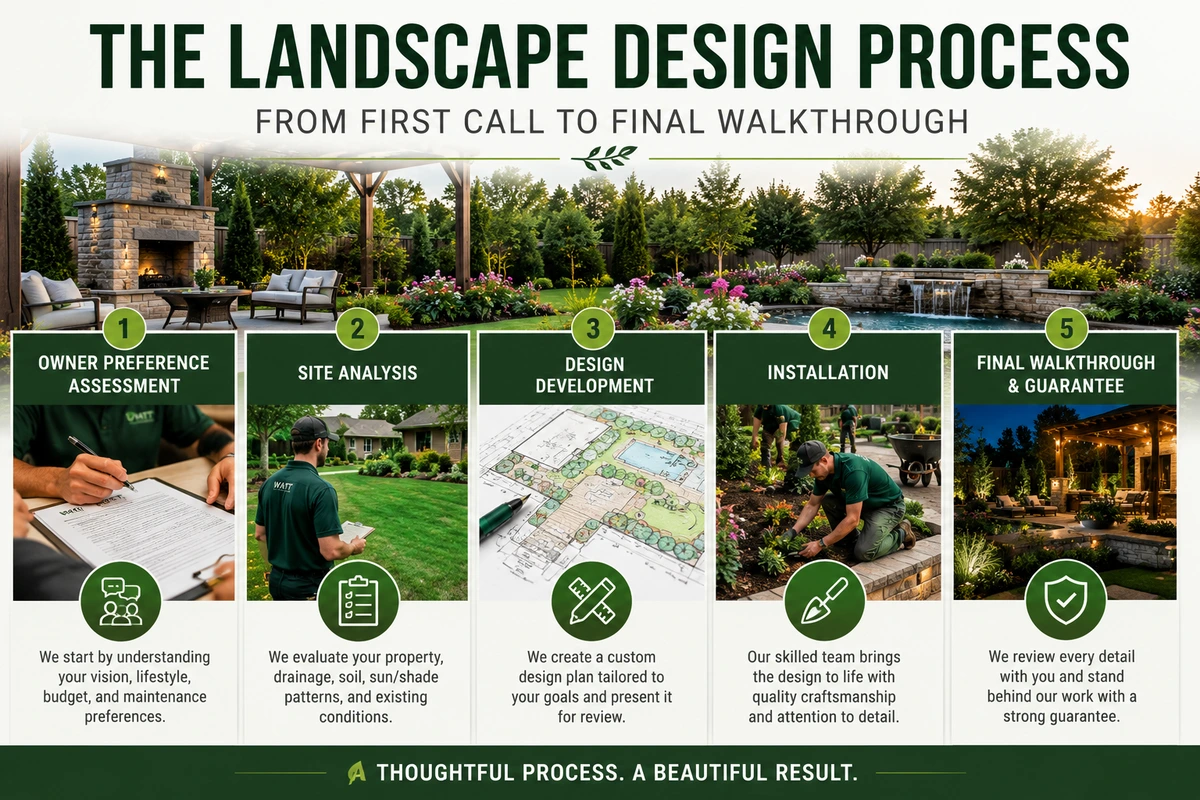
The Landscape Design Process: From First Call to Final Walkthrough
No surprises if you know the sequence going in.
Step 1: The Owner Preference Assessment
This is where we start. Before I draw anything, we go through a structured Owner Preference Assessment — the first phase of the OPLS process. It’s not a sales call. It’s a documented conversation that covers:
- How you use your outdoor space — entertaining, kids playing, gardening, or just wanting somewhere to sit.
- Maintenance tolerance — how much time and money you want to put into ongoing care.
- Aesthetic direction — formal, naturalistic, specific plants, and color preferences.
- Budget range and timeline.
- HOA restrictions or deed requirements.
Most homeowners haven’t been asked these questions in any organized way before. That’s why so many landscape projects end up mid-project with clients saying, “That’s not really what I meant.” The assessment prevents that.
Step 2: Site Analysis
I walk the property. Every property. And I’m looking at specific things:
- Drainage patterns — where water moves during heavy rain, where it pools, and how close it gets to the foundation.
- Soil composition — Houston clay needs amendment strategies tailored to each plant type.
- Sun and shade — not just rough estimates, but actual sun angles across the day.
- Existing conditions — trees, utilities, structures, and HOA setback lines.
- Microclimates — walls and pavement create heat pockets that affect plant hardiness in ways that aren’t obvious until something dies.
Skip this step, and you’re guessing. In Houston, guessing costs money.
Step 3: Design Development
With the assessment and site analysis complete, I produce a scaled site plan. For most residential projects, it includes a planting plan with species and placement, hardscape layouts with dimensions and materials, and grading and drainage recommendations.
You review and approve everything before anything happens on the ground. Changes at the design stage are free. Changes after installation are not.
Step 4: Installation
Our crews execute the approved plan. No substitutions without client sign-off. Payment structure is 30% at contract signing, 20% when installation begins, and the final 50% at satisfactory completion. Some larger projects may require additional progress payments, but any changes to the payment schedule are discussed and approved before work begins.
And I stay involved throughout. Not a project manager you’ve never met. Me.
Step 5: Final Walkthrough and Guarantee
Every project ends with a walkthrough. I cover maintenance requirements for each plant installed and answer whatever questions came up during the job. Trees and large shrubs carry a one-year guarantee. Smaller plants are guaranteed for six months from the installation date.
Houston Landscape Design Challenges Most Homeowners Don’t See Coming
Landscape design in Greater Houston isn’t the same as designing in Dallas, Austin, or San Antonio. The Gulf Coast creates conditions that change almost every decision.
Drainage Comes First
Heavy clay soil drains slowly. Flat lots drain poorly. Add intense Gulf Coast rainstorms, and water has nowhere to go unless grading is designed correctly.
Many homeowners focus on plants first. I focus on water first.
Drainage isn’t the exciting part of landscape design—but it protects everything else you spend money on. Learn more about our drainage solutions.
Plant Selection Is About Survival
Houston’s climate swings between long periods of heat, humidity, drought, and occasional hard freezes. Plants need to tolerate all of them.
Native and adapted species generally outperform plants selected purely for appearance. Proper placement matters just as much as species selection. Right plant. Right location. Right soil.
Outdoor Living Requires Planning
Most homeowners want outdoor living spaces they can actually use—not patios that sit empty because they’re too hot in the afternoon.
Shade structures, tree placement, lighting, airflow, and drainage all work together. A successful design plans these elements at the beginning instead of adding them later.
Frequently Asked Questions About Landscape Design Services
What does a landscape designer do?
A landscape designer develops a plan for outdoor spaces that includes plant selection, hardscape layout, grading, drainage, irrigation, and overall functionality. Professional design creates a roadmap before construction begins.
Do I need a landscape architect?
Projects involving grading, drainage, retaining walls, or complex outdoor living spaces often benefit from the experience of a Registered Landscape Architect. Simpler planting projects may not require one.
How long does landscape design take?
Most residential landscape designs are completed within several weeks, depending on project complexity, revisions, and permitting requirements.
How much do landscape design services cost?
Pricing varies based on property size, project scope, materials, drainage work, and construction requirements. A professional consultation and site evaluation provide the most accurate estimate.
Should landscaping be done before or after building a pool?
Major landscape construction should generally be planned alongside pool construction. Coordinating both projects helps avoid rework, protects new landscaping, and creates a more cohesive outdoor living space.
How long do new landscapes take to establish?
Most trees, shrubs, and perennial plants require one to three growing seasons to become fully established. Proper watering, mulching, and maintenance during the first year are critical to long-term success.
Can landscape design improve drainage problems?
Yes. Professional landscape design often incorporates grading, drainage systems, swales, catch basins, and strategic plant placement to direct water away from structures and reduce standing water.
Ready to Design an Outdoor Space That Lasts?
A successful landscape starts long before the first tree goes into the ground. It begins with a thoughtful plan that fits your property, your lifestyle, and the way Houston’s climate actually behaves.
At Watt Landscaping, every project begins with our Owner’s Preference Landscape System©, followed by a comprehensive site evaluation and a custom design built specifically for your home. From drainage solutions and planting plans to outdoor living spaces and landscape lighting, every element works together to create a landscape that’s both beautiful and built to last.
If you’re ready to transform your property, schedule a consultation with our team, and let’s start designing an outdoor space you’ll enjoy for years to come.